Sticker shock at the pharmacy counter is a special kind of stress. You walk in thinking you know the price, then a copay changes, a deductible resets, or the cashier tells you the “cash price” is higher than your monthly grocery bill. When that happens, a GoodRx alternative app is not about chasing coupons – it’s about getting a usable price fast, right where it matters.
The best alternative isn’t the one with the loudest ads. It’s the one that reliably shows you a lower price at your pharmacy, doesn’t waste your time with hoops, and doesn’t make you trade your privacy for a discount.
What a GoodRx alternative app should actually do
Most people don’t need more health apps. They need a simple tool that reduces out-of-pocket prescription costs today. A true GoodRx alternative app should let you search your medication and see estimated prices at nearby pharmacies, then give you something you can show the pharmacist at pickup.
That sounds basic, but the details are where people either save real money or get stuck.
It should work whether you have insurance or not
Discount apps are especially helpful if you’re uninsured or between plans, but they can also help if you are insured and your copay is higher than the cash price with a discount. This happens more than people expect – especially early in the year with high deductibles, or when a medication isn’t covered the way you assumed.
The key is flexibility. A good app lets you compare both options at the counter. If insurance is better, use insurance. If the discount price is better, you can ask the pharmacy to run it as a cash transaction with the discount instead.
It should be accepted at the pharmacies you actually use
A discount is only useful if your pharmacy can process it. The best apps provide broad nationwide acceptance across major chains and many local pharmacies. If an app only works at a small network, you might end up driving across town or waiting on transfers – and that can delay treatment.
It should be fast and low-friction
When you need a medication, you usually need it now. Apps that require registration, identity verification, long forms, or “activation” emails can slow you down when you’re already dealing with a doctor visit, prior authorization, or a sick kid at home.
Look for an app that is ready-to-use the moment you download it, with no fees and no “membership” that expires.
It should be clear about privacy
A prescription discount is not worth feeling exposed. Some apps are built like marketing platforms first and savings tools second. If you care about privacy, pay attention to whether the app claims it collects personal information, sells data, or requires an account tied to your identity.
Privacy-forward programs often do not need your private details to show discount pricing. If a tool can work without collecting more than it needs, that’s a real advantage.
Why prices vary so much (and why apps can help)
Two people can stand in the same pharmacy line and get two different prices for the same medication. That’s not you doing something wrong – it’s how drug pricing works in the US.
Pharmacies have different cash prices. Insurance plans negotiate different rates. Discount programs negotiate their own pricing too. Even within the same chain, pricing can vary by location.
That’s why a price-checking app can be so useful. It turns a confusing system into a quick comparison: “What will it cost me here, today?”
When a GoodRx alternative app is most helpful
If you’ve never used a prescription discount app, it’s easiest to start with common situations where they regularly help.
If you’re uninsured, you’re often exposed to the full cash price. A discount can reduce that cost immediately.
If you’re between jobs or waiting for coverage to start, a discount app can fill the gap so you don’t have to skip doses.
If you’re insured but have a high deductible, the first few refills of the year can be painful. Sometimes a discount price is lower than your “insurance price,” and you can choose the better deal.
If your medication isn’t on your plan’s formulary or has restrictions, you may be stuck paying a high out-of-pocket amount. A discount app gives you another option without waiting weeks.
And if you’re caring for a family member, it’s helpful to have one tool you can use again and again for multiple medications, not a one-time coupon.
What to compare when choosing a GoodRx alternative app
If you’re price shopping, you don’t need a dozen features. You need a few things to be consistently true.
First, compare ease-of-use. Can you download the app, search your medication, and get a usable discount in under a minute? If it takes longer, that friction tends to show up again at the counter.
Second, compare pharmacy coverage. “Nationwide” should mean something. The wider the acceptance, the less you have to change pharmacies or reroute refills.
Third, compare whether the program charges fees or tries to push you into a paid tier. Some tools are free at the start but become limited unless you upgrade.
Fourth, compare how the app handles privacy. If it requires an account, asks for unnecessary personal details, or feels like it’s built around data collection, you can choose a simpler option.
Finally, compare reliability at checkout. The real test is whether the pharmacy can process the discount cleanly. If you frequently have to troubleshoot codes, that’s not a savings tool – that’s a hassle.
How to use any prescription discount app the right way
Even the best discount app can’t help if it’s used in the wrong order. Here’s the approach that prevents surprises.
Search your exact medication name and strength before you go. “Generic Lipitor” is not the same as atorvastatin 20 mg, and the strength matters.
Check multiple nearby pharmacies if you can. Prices can vary a lot, and switching locations for one refill can save enough to justify the trip.
At pickup, tell the pharmacy you want to compare prices. You can ask them to run your insurance first, then run the discount, and you can choose the lower total. Most pharmacies are used to this.
If you’re picking up for someone else, make sure you have the correct prescription details. A small mismatch in quantity or dosage can change the price.
One simple option if you want no-fee, no-hassle savings
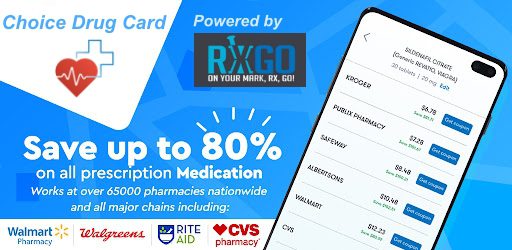
If what you want is a free, privacy-forward phone app that’s ready to use with no activation, no registration, and no expiration, Choice Drug Card is built for that. You download the app, search medication prices, and show it to the pharmacist to see if you can get a lower cost than insurance – and it’s accepted at 70,000+ pharmacies nationwide. You can learn more at https://choicedrugcard.com.
Trade-offs to be honest about
Discount apps are practical, but they’re not magic, and it helps to know what to expect.
A discount price can change over time. Drug pricing shifts, and the best move is to re-check prices occasionally, especially for chronic refills.
Using a discount instead of insurance may not apply toward your deductible or out-of-pocket maximum. If you’re trying to hit a deductible for planned care later in the year, this is worth thinking about. Sometimes paying a bit more through insurance is strategically better for your overall yearly costs. Other times, the immediate savings matter more – especially if the alternative is skipping medication.
Discounts also depend on the specific medication and pharmacy. One app might be better for one drug, another app might be better for a different drug. If you’re managing several prescriptions, it can be worth sticking with a tool that’s easy to check quickly and widely accepted.
And if you use manufacturer copay cards or certain specialty pharmacy arrangements, those are different programs with different rules. A discount app is usually aimed at retail pharmacy prescriptions and everyday medications.
The simplest mindset: compare, don’t guess
If you’re looking for a GoodRx alternative app, you’re already doing the most important thing: refusing to guess and refusing to overpay just because the price is confusing.
The best habit is small and repeatable. Before you pick up a prescription, check the price in the app. At the counter, compare it to insurance if you have it. Choose the lower price, get the medication, and move on with your day.
The goal isn’t to become an expert in drug pricing. The goal is to protect your budget and keep treatment on track – without paperwork, without pressure, and without handing over more personal information than you need.