A refill should not force you to choose between your medication and your grocery bill. If you need prescription help without Medicare, the good news is that you still have real options – and some of them work immediately.
Plenty of people fall into this gap. Some are under 65 and uninsured. Some are between jobs. Some have insurance, but the deductible is so high that the pharmacy price still hurts. Others need a drug their plan does not cover well, or they are waiting for new coverage to begin. Whatever put you here, the problem is the same: you need your medication now, and you need a lower price.
Where prescription help without Medicare usually comes from
When people hear “drug assistance,” they often assume it has to come from a government program or a full insurance plan. That is not always true. In practice, lower-cost prescriptions often come from a mix of savings tools, manufacturer programs, pharmacy pricing differences, and cash discounts that beat what you would pay otherwise.
That matters because medication pricing is rarely straightforward. The same generic drug can cost one amount at one pharmacy and a very different amount down the street. A brand-name medication may have a copay through insurance that ends up being higher than a discount cash price. If you are paying out of pocket, flexibility matters more than loyalty to one pricing method.
The first thing to know is simple: not having Medicare does not mean you are out of options. It usually means you need to compare the options that apply to your situation instead of assuming the first price is the best one.
Start with the fastest fix: compare the cash price
If you need immediate prescription help without Medicare, the fastest move is usually to check the cash price before you pay. This sounds basic, but it saves people money every day because retail prescription prices vary more than most expect.
A discount phone app can help you see whether the negotiated price is lower than what the pharmacy would otherwise charge. This is especially useful for generic medications, common maintenance drugs, and prescriptions that fall into a coverage gap. In many cases, you simply search your medication, compare the available price, and show the app at the pharmacy counter.
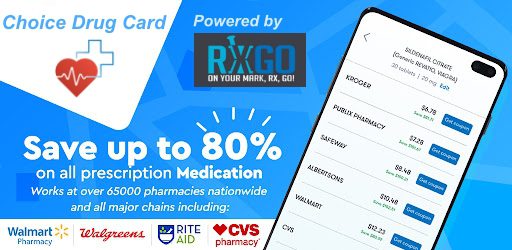
That approach works well for people who do not want another complicated program to manage. No forms, no waiting period, and no guessing whether you qualify can make a big difference when you are standing at the register. A free option like Choice Drug Card is built for exactly that kind of moment – download the phone app, search medication prices, show it to the pharmacist, and save if the price is lower.
There is one trade-off to keep in mind. A discount price is a cash price, so it typically does not count toward your insurance deductible. For some people, that is not a concern because the discount is clearly cheaper. For others with expensive ongoing care, it may be worth comparing both paths before deciding.
If you have insurance, you may still need help
A lot of people looking for lower medication prices do have coverage. They just do not have useful coverage for that prescription.
This happens when a drug is not on the formulary, when a high deductible has not been met, or when coinsurance leaves you with a painful bill anyway. It also happens with brand-name medications where the plan’s price is simply not the best price available that day.
In those cases, ask the pharmacy to check both your insurance price and the discount cash price. You are not being difficult. You are being careful. Pharmacies see this every day, and a quick comparison can spare you from overpaying.
Ask whether a generic or therapeutic alternative makes sense
Sometimes the best savings option is not a coupon or a program. It is a conversation.
If your medication cost has jumped, ask your prescriber whether there is a lower-cost generic or a similar drug in the same treatment category that would work for you. Many doctors are open to this, especially when they know cost is putting adherence at risk. Pharmacists can also flag when there may be a lower-cost equivalent to discuss with your doctor.
This is where “cheaper” needs some nuance. A lower-cost alternative is only helpful if it is clinically appropriate. The right question is not “What is the cheapest drug?” It is “Is there a safe, effective option that costs less?” That distinction protects both your health and your wallet.
Look into manufacturer savings and patient assistance
For brand-name drugs, manufacturer programs can sometimes reduce the cost significantly. These offers tend to work best for people with commercial insurance or for people who meet income and eligibility requirements for patient assistance.
The downside is that these programs can be inconsistent. Some expire, some exclude certain patients, and some involve paperwork or approval delays. That does not make them a bad option. It just means they are not always the quickest solution when you need your prescription filled today.
If you take a high-cost brand medication long term, though, it is worth asking your doctor’s office whether a manufacturer savings card or patient assistance path exists. For short-term or urgent needs, a discount cash price may be easier to use on the spot.
Talk to the pharmacist before you leave the counter
Many people assume the number on the screen is final. Often, it is just the first number presented.
If the price feels too high, ask whether there is a lower cash option, whether a discount app can be applied, whether a different quantity changes the price, or whether a 30-day supply is cheaper than a 90-day supply right now. Pricing is not always intuitive. Sometimes a smaller fill is more manageable. Sometimes a larger fill produces better value. It depends on the medication and the pharmacy’s contracted rates.
A good pharmacist will usually help you work through practical options. They know skipped doses and delayed pickups create bigger health problems later.
Why app-based savings work well for coverage gaps
People in transition often need a solution that works today, not after enrollment, approval, or a stack of forms. That is why app-based savings tools are useful for people without Medicare, people between plans, and families managing multiple prescriptions.
The best ones remove friction. A phone app is easier than carrying paperwork. Immediate access is better than waiting for a card in the mail. Privacy matters too, especially for consumers who do not want to hand over personal information just to check a price.
That combination – free access, no activation, no fees, no expiration – is what makes a discount app practical instead of theoretical. It becomes something you can reuse every time a medication comes up, whether it is for you, your spouse, a child, or even a pet with a prescription filled at a retail pharmacy.
Prescription help without Medicare for seniors under pressure
Some seniors look for prescription help without Medicare because they are not enrolled, they are in a confusing transition, or they simply need a lower price than their current coverage offers. Others are helping a spouse or family member who does not qualify for the same benefits.
For this group, simplicity matters more than ever. If the savings tool is hard to access, hard to understand, or full of conditions, people stop using it. A straightforward phone app with nationwide pharmacy acceptance is often the difference between using the savings and giving up on it.
That same simplicity helps caregivers. If you manage prescriptions for more than one person, you need a repeatable process, not a new set of rules every month.
The biggest mistake: assuming your first price is your only price
Prescription pricing rewards comparison. That may be frustrating, but it is also the opportunity.
If you remember one thing, make it this: the first price you hear at the pharmacy may not be the lowest one available to you. Insurance is not always cheapest. Cash is not always cheapest. Manufacturer help is not always quickest. The right answer depends on the drug, the pharmacy, your coverage status, and how fast you need the medication.
That is why the practical path is usually the best one. Compare prices. Ask questions. Use the option that lowers your out-of-pocket cost today.
Nobody should delay treatment because the pricing system is confusing. If you need prescription help without Medicare, start with the tools that are immediate, free to use, and easy to show at the pharmacy counter. The best savings strategy is the one that helps you leave with your medication instead of walking away without it.