You get to the pharmacy, hear the total, and your stomach drops. Not because you forgot the prescription – because you cannot pay $300 today and still keep the lights on.
If you are uninsured (or you have insurance that is not helping much), you are not alone. The good news is that “cash pay” does not have to mean “full price.” There are real prescription discounts for uninsured patients, and they are often available right at the counter in a way that feels almost too simple.
What prescription discounts for uninsured really are
A prescription discount is not insurance. It does not pay claims, it does not count as minimum essential coverage, and it usually does not move you toward a deductible. Instead, it is a pricing option – a way to access a negotiated rate so the pharmacy runs your prescription as a discounted cash transaction.
That distinction matters. Because when you are uninsured, the price you are quoted can be the pharmacy’s cash price, and that can vary widely between pharmacies and even between locations of the same chain. A discount program can tighten that gap by giving the pharmacy a different set of pricing instructions to process at the register.
For many people, the most practical mental model is: you are choosing the lower of two prices. The pharmacy can run the prescription one way (their standard cash price) or another way (a discount rate). You pick what costs less that day.
Why uninsured patients often get the highest prices
It feels backward, but uninsured patients can end up paying more than insured patients for the same medication. That happens for a few reasons.
First, drug pricing is not a single number. There are list prices, pharmacy acquisition costs, plan-negotiated rates, and the pharmacy’s own cash pricing. Without an insurance plan’s negotiated terms, you can get stuck with a price that is simply higher than what large payers negotiate.
Second, pharmacies have different suppliers and different pricing strategies. One store might price a generic antibiotic aggressively low to keep customers coming back, while another store’s cash price is much higher.
Third, some medications have huge swings between brand and generic, between tablet strengths, or between a 30-day and 90-day supply. If no one flags that at the moment you are paying, you might assume the high price is unavoidable when it is not.
The most reliable ways to get discounts without insurance
There are several paths to a lower price. Each one can be useful, and it depends on the medication, how quickly you need it, and whether you are comfortable doing a little comparison shopping.
Pharmacy counter discount cards and coupons
This is the fastest option for many people because it does not require insurance enrollment, eligibility approval, or waiting for shipping. You present the discount card information to the pharmacist and ask them to run it as the payment method.
A key advantage is flexibility. If you are between jobs, waiting on Medicare enrollment, or simply uninsured, you can use a discount card today. Some programs also allow you to use it even if you are insured, when the discounted price beats your copay.
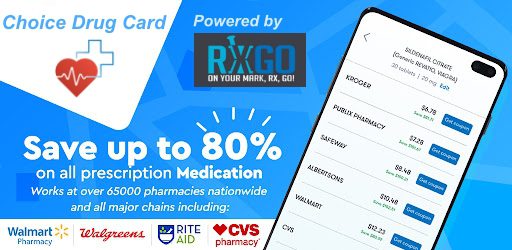
If you want a simple, privacy-forward option that is designed for everyday pharmacy use, Choice Drug Card is one example. It is free, requires no activation, and can be used at many pharmacies nationwide – you can get the card at https://choicedrugcard.com.
Asking for the cash price and comparing pharmacies
Even if you plan to use a discount, always ask what the cash price is and what the discounted price is. Do not assume the first number you hear is final.
If the price is still too high, call one or two nearby pharmacies and ask for the price of the exact medication, strength, and quantity. Price differences of $20 to $200 are not rare, especially for common generics.
This is also where timing matters. If you need the medication immediately, you may prioritize “available today” over “lowest price.” If it is a maintenance medication you take every month, you have more leverage to shop.
Talking to your prescriber about lower-cost equivalents
This is not about “cheaper is worse.” It is about options.
If you are uninsured, tell your prescriber upfront that you need the most affordable effective choice. Ask whether there is a generic version, a different medication in the same class, or a different dose form that costs less. Sometimes switching from a brand-name tablet to a generic capsule (or vice versa) changes the price dramatically.
Also ask about quantity. A 90-day supply can be cheaper per day than a 30-day supply for some medications, but not all. For certain drugs, the 90-day price is surprisingly higher depending on how it is priced.
Manufacturer assistance and patient support programs
For high-cost brand-name medications, patient assistance programs can help – but they come with trade-offs. Many require applications, proof of income, and sometimes documentation that you are uninsured. Some take time to approve, which can be hard if you need the medication right away.
Copay cards are common for insured patients but usually do not apply if you are uninsured. Patient assistance is a different category and may be the better fit, but it can be paperwork-heavy.
How to use a prescription discount at the pharmacy counter
The counter process is straightforward, but a few small details can save you from delays.
First, bring the discount card information with you (printed or on your phone). When you drop off the prescription, say clearly: “Please run this without insurance and apply this discount card.” That helps the pharmacy team choose the right processing method from the start.
Second, if you have insurance but a high deductible, ask them to check both prices. You are allowed to choose the cheaper option. Sometimes your insurance price is lower. Other times, the discount price is much lower.
Third, check that the medication name, strength, and quantity match what the doctor prescribed. Pricing is tied to these fields. A small change – like 60 tablets instead of 30 – can change the price a lot.
If the price still looks wrong, ask the pharmacist to re-run it and confirm the quantity and days’ supply. Pharmacies are busy and mistakes happen. A polite “Can we double-check the quantity and see if there’s a lower price with this discount?” is completely reasonable.
When discounts help most (and when they might not)
Prescription discounts for uninsured patients tend to shine in a few scenarios.
They often work extremely well for common generics: blood pressure meds, cholesterol meds, diabetes medications (some, not all), antibiotics, inhalers in certain cases, and many mental health medications. These are medications with plenty of competition and wide pharmacy pricing variation.
They can also help when your insurance does not cover a medication, or when the drug is “non-formulary” and the copay is essentially the full price.
But there are limits. Some specialty medications are expensive no matter what, and a discount may not bring the cost down enough. Some controlled substances may have restrictions, and pharmacies may follow tighter rules on how they process pricing. In those cases, you might need a mix of approaches: discount pricing, prescriber alternatives, and patient assistance.
Also, a discount price can differ by pharmacy. A card that saves you $60 at one pharmacy might save $10 at another. That is why it is smart to keep comparison shopping in your back pocket, even if you have a “go-to” store.
Common questions to ask to avoid overpaying
If you want to keep this simple, you do not need to become a pricing expert. You just need a short script.
Ask the pharmacy: “What is the cash price?” Then ask: “What is the price if you apply this discount?” If you have insurance, add: “And what is it through my insurance today?”
Ask your prescriber: “Is there a generic or a lower-cost option that works the same way?” and “Can you write it for a quantity that gives the best price?”
Ask yourself: “Do I need this today, or can I afford to check one other pharmacy?” That single decision often separates a painful bill from a manageable one.
A quick reality check on savings claims
You will see savings claims like “up to 80%.” That can be real, but “up to” is doing a lot of work. Savings depend on the drug, the pharmacy, and local pricing.
The practical way to think about it is this: a discount card is a tool to get a better price, not a guarantee of a specific percentage every time. If it saves you $8 on one refill and $75 on the next, it is still doing its job. The goal is to keep you taking the medication as prescribed instead of rationing doses or walking away from the counter.
If you are uninsured right now, start here
If you need medication this week, focus on speed and certainty.
Pick one discount option you can use immediately, then ask the pharmacy to run it and compare it to the cash price. If the number is still out of reach, call one additional pharmacy for a quote and ask your prescriber if there is a lower-cost equivalent.
That is not a complicated system. It is just a repeatable habit. And once you have it, you can use it for yourself, your kids, an aging parent you help care for, or even a pet prescription that costs more than expected.
A high price at the pharmacy counter can feel like a dead end. It is not. Keep asking for the other price, every time, until the number is something you can actually live with.