That moment at the pharmacy counter is familiar: you hand over the prescription, expect a reasonable copay, and the total comes back way higher than you planned. Maybe your deductible resets in January. Maybe your medication is suddenly “not covered.” Maybe you are between jobs, between plans, or just trying to stretch a tight budget.
A prescription discount app is built for that exact moment. It gives you a ready-to-use discount you can show the pharmacist to get a lower cash price. For a lot of people, that is the difference between picking up the medication today or walking away and hoping tomorrow is better.
What a prescription discount app actually does
Most pharmacies have a “cash price” for a medication that can vary a lot from one location to the next. On top of that, there are pricing agreements behind the scenes that can lower what a consumer pays when a discount program is applied.
A prescription discount app provides access to those negotiated discounts. You search for your medication, compare prices at nearby pharmacies, then show the app at the counter so the pharmacy can apply the discount. You are not changing the prescription itself, and you are not ordering medication through the app. You are simply presenting a discount option at checkout.
The biggest practical point: the app helps you shop a price that is often very different from what your insurance copay would be, especially when you are dealing with high deductibles or a medication that sits outside your plan’s preferred coverage.
When it makes sense to use a prescription discount app
People sometimes assume discount apps are only for the uninsured. In reality, they are useful in several common situations.
If you are uninsured, the benefit is straightforward. You need a lower cash price, and a discount can reduce the total immediately.
If you have insurance but a high deductible, you may be paying the “full” negotiated rate early in the year. In those months, a discount price can be lower than what your plan charges you at the counter.
If a medication is not covered or is considered non-formulary, you can get hit with an unexpectedly high price. A discount app can offer a different path that is still legal, still pharmacy-processed, and often much less expensive.
If you are between plans because of a job change, a waiting period, or a coverage gap, it can serve as a practical bridge. You can fill needed medications without putting off treatment.
And if you manage prescriptions for a household, including seniors, kids, or even pets, a discount option you can pull up on your phone makes it easier to handle multiple refills without guessing what each one will cost.
Discount app vs insurance: it depends, so compare both
A discount is not always better than insurance. Sometimes your plan’s copay is still the best deal, especially for common generics with fixed copays or for medications your plan heavily subsidizes.
Other times, the discount price wins. This is most likely when:
You have not met your deductible and the insurance price looks like a cash price in disguise.
Your medication is excluded from coverage, or your plan requires a prior authorization and you need a short-term fill.
Your plan is applying coinsurance (a percentage) to an expensive brand-name drug.
The practical move is simple: ask the pharmacy to check both. You can say, “Can you run it through my insurance, then also check the discount price?” Pharmacies do this every day.
One important trade-off: if you use a discount instead of insurance, that purchase typically does not count toward your deductible or out-of-pocket maximum. For some people, especially those who expect large medical expenses later in the year, paying through insurance may be worth it even if today’s price is higher. For others, the immediate savings matter more because the bill is due now.
What to look for in a prescription discount app
Not all discount programs feel the same when you are standing at the counter. The best ones remove friction and help you get to a usable price fast.
Start with ease of use. You should be able to download the app, search your medication, and pull up the information the pharmacy needs without creating an account or jumping through hoops.
Next, look for broad acceptance. An app only helps if you can use it where you already fill prescriptions, or if it helps you find a nearby pharmacy that will take it.
Also pay attention to how the program handles privacy. Some apps want registration, emails, or personal details. Others are built to work without collecting private user information. If privacy is a priority for you, pick the option that matches your comfort level.
Finally, check how clearly prices are shown. You want to see the pharmacy name, the estimated price, and the strength and quantity assumptions. Small details matter. A 30-day supply and a 90-day supply can price very differently, and the same medication can have multiple strengths.
How to use a prescription discount app at the pharmacy
In real life, this is a three-step routine.
First, download the phone app before you head to the pharmacy, if you can. Doing it at the counter is possible, but it adds stress when a line is forming behind you.
Second, search your medication and select your pharmacy. Make sure you match the exact drug name, strength, and quantity on your prescription. If you are unsure, check the prescription label or ask your pharmacist to confirm what they are filling.
Third, show the app to the pharmacist or pharmacy tech and ask them to apply the discount. They will enter the information into their system like they do for other discount programs.
If you have insurance, you can still compare. Ask them to run your insurance first, then run the discount option. Choose the lower price if that is your goal for that fill.
If the pharmacy’s price does not match what you expected, do not assume it is final. Confirm the quantity, confirm the strength, and confirm the pharmacy location. Price estimates can change if any of those inputs change.
Why prices vary so much from pharmacy to pharmacy
It can feel unfair, but it is common. Different pharmacies have different acquisition costs, different contracts, and different pricing strategies. Even within the same chain, prices can vary by location.
Discount programs add another variable. A discount price is often tied to a specific set of agreements, and that can produce a much lower total at Pharmacy A than at Pharmacy B, even across the street.
This is why a prescription discount app is most powerful when it helps you compare nearby options quickly. Sometimes the best savings is not a complicated trick. It is simply filling the same prescription at a different pharmacy.
Situations where you should slow down and ask questions
Discount pricing is a tool, not a replacement for medical advice. There are a few moments when it is smart to pause.
If you are on a medication that requires close monitoring or a specific brand due to medical necessity, ask your prescriber and pharmacist before making changes. Switching from brand to generic is often fine, but not always. Your pharmacist can explain whether the prescribed product is interchangeable.
If a price looks “too good,” make sure you are comparing the same thing. A lower price on a different strength, a different form (tablet vs capsule), or a different quantity is not the same deal.
If you are working toward meeting a deductible because you anticipate major healthcare costs later in the year, consider whether paying through insurance makes more sense even when the discount price is lower. This is one of those areas where the best choice depends on your year, not just today.
And if you rely on copay assistance or manufacturer programs for certain brand-name medications, ask how those interact with your insurance and pharmacy billing. Those programs are separate from discount cards and may have their own rules.
Seniors, caregivers, and families: make it an everyday tool
If you help a parent manage prescriptions, you already know how quickly costs can stack up, especially with multiple maintenance medications. The simplest way to reduce stress is to get predictable about price-checking.
A good habit is to look up the refill price before pickup day. If the price jumps, you can call the pharmacy while you still have time to decide whether to transfer the prescription to another location or ask your prescriber about alternatives.
For families, the value is in reuse. Once you have an app on your phone, you can check prices for anyone in the household. The goal is not to become an expert in pharmacy pricing. It is to avoid surprises.
Pet prescriptions count too
Many people are surprised to learn that pharmacy discounts can apply to pet medications filled at retail pharmacies, depending on the drug. If your veterinarian sends a prescription to a local pharmacy, it is worth checking the cash price and the discount price.
Just make sure the prescription is written clearly, and confirm the medication and dosage are appropriate for your pet. The pharmacist can fill what is prescribed, but your vet is the one who should confirm the treatment plan.
A practical option if you want free, no-hassle savings
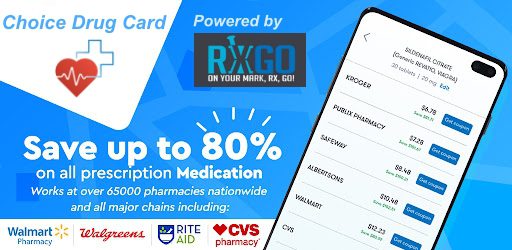
If your priority is a simple app that is free to use, requires no registration, and is designed to be privacy-forward, Choice Drug Card is a prescription savings program built around that frictionless approach. You can search medication prices, then show the app at the pharmacy to see if the discount price beats what you would otherwise pay.
The best time to set this up is before you are forced to make a decision at the counter. Download the app, test a few of your common medications, and keep it on your phone like you keep a flashlight – you may not need it every day, but when you need it, you need it immediately.