The same prescription can cost $12 at one pharmacy and $67 a few blocks away. That is not rare. It happens every day, and if you are paying out of pocket, dealing with a high deductible, or stuck with a drug your plan does not cover well, that price gap matters fast.
If you are trying to figure out how to find lowest pharmacy price near me, the good news is that you do not need to call ten stores or sign up for a complicated savings program. You need a quick way to compare prices, understand when insurance is not your best option, and know what to show at the pharmacy counter.
How to find lowest pharmacy price near me without wasting time
The fastest way to compare prescription costs is to search your exact medication, dosage, and quantity before you leave home. Those details matter. A 30-day supply may price differently than a 90-day supply, and one tablet strength can cost much more than another even when the total dose is similar.
Start with the medication name exactly as it appears on your prescription. Then check the dose, such as 10 mg or 20 mg, and the quantity your doctor prescribed. If there is a generic version, compare that too. In many cases, the generic price is much lower, but not always. Some branded drugs have negotiated discounts that narrow the gap more than people expect.
A prescription savings phone app is often the easiest tool here because it lets you search nearby pharmacy prices in one place. Instead of guessing which store might be cheaper, you can see price differences before you get to the counter. That matters when you are sick, in a rush, or helping a parent, spouse, child, or even a pet get medication the same day.
Why pharmacy prices vary so much by location
Many people assume a prescription has one standard cash price. It does not. Retail pharmacy pricing depends on contracts, local competition, store pricing policies, and the discount available for a specific drug at a specific location.
That is why one chain can be cheaper for cholesterol medication while another is better for antibiotics or inhalers. Even two stores under the same national name can sometimes show different pricing. If you have ever filled one prescription at a low price and come back later for another medication that cost much more, you have seen this firsthand.
Insurance can add another layer. Sometimes your copay is lower than a discount price. Sometimes the cash discount beats your insurance, especially if you have not met your deductible or the medication falls into a costly tier. The smart move is not to assume. It is to compare both options when possible.
The simplest way to compare local prescription prices
The process should be easy enough to use when you are tired, busy, or standing in your kitchen trying to decide where to go. A practical approach looks like this.
First, download a prescription discount phone app. Look for one that is free, requires no activation, and works at a wide network of pharmacies. If privacy matters to you, and for many families it should, use a tool that does not require unnecessary personal information just to see prices.
Second, search the exact prescription. Be precise with the medication name, strength, and quantity. If your doctor wrote for capsules, do not assume tablets will price the same. If your refill allows a 90-day supply, compare that against a 30-day fill.
Third, choose the pharmacy with the best price that is also convenient enough for you to use. The absolute cheapest option is not always the best option if it adds a long drive, delays treatment, or creates problems getting there each month. Saving money matters, but so does actually getting the medication on time.
Fourth, show the app price to the pharmacist when you pick up the prescription. If the discount price is lower than your insurance price, ask to use the discount instead of insurance for that fill.
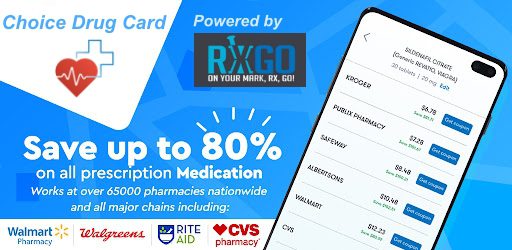
That is the real advantage of tools like Choice Drug Card. The phone app is free, there are no fees, no activation, no expiration, and you can use it right away to search prices at pharmacies nationwide.
What to check before you choose the lowest price
The lowest number on the screen is important, but it should not be the only thing you look at. Make sure the pharmacy has the medication in stock. A low price does not help if you need to wait several days for the drug to arrive.
You should also check whether the prescription format matches what your doctor wrote. Extended-release tablets, capsules, name-brand versions, and generics are not interchangeable unless your prescriber and pharmacist approve it. A price on the wrong version can create confusion at pickup.
If you are managing an ongoing condition, think about refill convenience. A pharmacy that is a few dollars higher but reliably fills your maintenance medication on time may be a better fit than a store that is cheaper but inconsistent. It depends on your situation. For one-time medications like antibiotics, lowest price may be the main factor. For long-term medications, consistency matters too.
When a discount price may beat your insurance
This catches a lot of people off guard. They assume insurance always gives them the best deal. Not true.
If you have a high deductible plan, you may be paying close to full price early in the year. If your medication is non-formulary or placed in a higher tier, your copay or coinsurance can be surprisingly high. Some plans also do not cover certain generic or brand-name medications the way patients expect.
In those cases, a discount price can be lower than your insurance price at the counter. That does not mean you should ignore your insurance every time. It means you should compare. Use whichever option gives you the better price for that fill.
This is especially useful for people between jobs, families in a coverage gap, seniors watching every monthly expense, and caregivers trying to stretch a healthcare budget across multiple household members.
How to avoid common mistakes when searching prices
One common mistake is searching only by drug name and ignoring dose and quantity. That can give you a price that does not match your actual prescription. Another is assuming every pharmacy will honor the same discount at the same rate. They will not.
People also forget to ask the pharmacist to process the discount instead of insurance when the discount is cheaper. If the prescription is automatically run through your insurance, you may pay more without realizing there was another option.
A final mistake is giving up after one search. Prices change, and another nearby pharmacy may be lower for your next refill. This is why a reusable app matters. You want something you can check again next month, not a one-time coupon that disappears.
How to find the lowest pharmacy price near me for families, seniors, and pets
Price shopping is not only for your own prescriptions. If you help a parent manage heart medication, pick up a child’s antibiotic, or fill a pet prescription at a retail pharmacy, the same comparison process can save real money.
Families often benefit most because they are filling more than one prescription over time. A small price difference on one medication may not feel dramatic, but across multiple refills it adds up quickly. Seniors often see the same effect, especially when managing several maintenance drugs each month.
Pet owners should not overlook this either. Many veterinary medications are filled at standard retail pharmacies, and local price differences can be significant there too.
What matters most when choosing a savings tool
The best savings tool is the one you will actually use. That usually means it is free, fast, accepted at a large number of pharmacies, and simple enough to pull up while you are standing at the counter. No one wants a long registration process when they are trying to pay for needed medication.
It also helps when the tool never expires and does not rely on a physical card you can lose. A phone app is easier for everyday use because it stays with you. For many consumers, privacy matters just as much as convenience. If an app lets you search without collecting private personal information, that is a meaningful benefit.
Paying less for medication should not feel complicated or risky. It should feel straightforward.
If a prescription price seems too high, trust that instinct and check again before you pay. A few seconds of comparison can be the difference between putting off treatment and getting the medication you need today.