You pick up a prescription you have filled every month, and the total is suddenly $187. Same dose, same pharmacy, same everything. The tech at the counter cannot explain it beyond a quick – “that’s what it’s coming up as today.” If you have ever had that moment, you already understand why it pays to compare.
Prescription pricing in the US is not a neat menu. It changes by pharmacy, by zip code, by discount program, and by whether you run it through insurance or pay cash. The good news is you can often reduce what you pay in minutes – without switching doctors, without calling around, and without waiting for your next plan year.
Why prescription prices vary so much
Two pharmacies across the street from each other can charge very different cash prices for the exact same medication. That is not because one is “better.” It is usually because each pharmacy has its own pricing strategy, supplier contracts, and discount relationships.
Insurance adds another layer. Your copay is not always the lowest price. If your plan has a high deductible, you may be paying close to the plan’s negotiated rate until you hit that deductible. If a medication is not covered (or requires prior authorization), the “covered” price might be irrelevant – you are effectively shopping cash.
Generics can be especially confusing. One pharmacy might have a low cash price on a generic, while another has a higher retail price but a strong discount through a savings program. Brand-name drugs can swing even more when coupons, manufacturer programs, or discount pricing are in play.
The mindset shift: you are comparing transactions, not pharmacies
When people hear “compare pharmacy prices,” they assume it means choosing one pharmacy and sticking with it. For a lot of families, the better approach is to compare each fill, then decide what makes sense that day.
Sometimes you will use insurance. Sometimes you will pay cash. Sometimes you will transfer a prescription because the difference is big enough to justify a quick switch. Other times you will stay put because convenience matters and the savings are small.
It depends on your medication, your insurance status, and your tolerance for extra errands. The point is to give yourself the option to choose.
How to compare pharmacy prices for prescriptions (the fast way)
If you want the simplest routine, compare prices before you go to the counter. The fastest method for most people is using a prescription discount phone app that lets you search your medication and see prices at nearby pharmacies.
Here is what to do, step by step.
Step 1: Search the exact medication details
Prices can change based on specifics, so be precise. Use the exact drug name, dosage strength (like 10 mg vs 20 mg), form (tablet, capsule, liquid, cream), and quantity (30, 60, 90). If you compare a 30-count price to a 90-count fill, the “cheaper” option might be misleading.
If your doctor wrote “dispense as written” for a brand, the generic price will not help you. If you have flexibility, ask your prescriber whether a generic is appropriate – but do not change anything without medical guidance.
Step 2: Compare nearby pharmacies, not just one chain
Many people only check the big name down the street. That can work, but it is not the whole market. Grocery pharmacies, big-box stores, and local independents often show up with very different pricing.
Also remember that “same chain” does not always mean “same price.” One location may price differently than another in the same city.
Step 3: Decide whether to use insurance or pay cash
At the counter, you usually have a choice: run it through insurance, or use a discount price and pay cash. Ask the pharmacy to tell you both totals so you can choose the lower one.
A few practical notes:
If you use a discount price instead of insurance, that purchase typically does not apply toward your deductible or out-of-pocket maximum. For many people, the immediate savings is still worth it.
If you are in the middle of meeting a deductible, it can be a judgment call. Some months you may want the lower cash price. Other times, you may prefer to pay more now if you are close to hitting your deductible and want insurance to kick in sooner.
If a medication is not covered, the insurance price might be the highest option. That is a prime time to shop cash pricing.
When comparing prices makes the biggest difference
You can compare prices for every prescription, but certain situations tend to produce the biggest savings.
High-deductible plans and early-in-the-year refills
If you have insurance but a deductible that resets each year, January and February are often painful. Many people are effectively paying cash-like pricing during that period. A quick price check can prevent you from overpaying during those months.
Chronic medications you refill often
Even a $12 difference matters when it repeats every month. Blood pressure meds, cholesterol meds, diabetes medications, inhalers, thyroid meds, and mental health medications are common examples where small monthly gaps add up.
“Sticker shock” medications
Some prescriptions are infamous for wide price swings. If you are starting a new medication and the first quote seems outrageous, treat that as a signal to compare before you pay.
Pet prescriptions
Many families do not realize pet medications can be filled at retail pharmacies in many cases. If your vet writes a prescription, you can often price shop it like any other. That can be a meaningful budget win for long-term pet meds.
Trade-offs to consider before switching pharmacies
Comparing prices is smart, but you do not have to chase every dollar. There are real-life factors that matter.
If a pharmacy is far away, the time and transportation cost may erase the savings. If you rely on delivery, the cheapest cash price might not be the best fit.
Also consider how many prescriptions you manage. Some caregivers prefer keeping everything at one pharmacy for safety and coordination, especially when multiple family members take multiple medications. That is a reasonable choice. In that case, you can still compare prices – and use the information to ask your regular pharmacy whether they can help you find a better option.
Finally, some medications can be harder to keep in stock, especially certain doses or specialty items. If you find a great price but the pharmacy cannot fill it promptly, the “best” choice changes. Saving money should never require skipping doses.
Common mistakes that lead to overpaying
Most people do not overpay because they are careless. They overpay because the system is confusing, and the counter is a high-pressure place to make decisions.
One common mistake is assuming your copay is automatically the best deal. Another is comparing the wrong quantity or dosage and thinking you found a lower price.
People also forget to re-check pricing. A price that was great six months ago might be mediocre today. If your total suddenly jumps, do not assume it is permanent.
And if you are using a discount price, make sure the pharmacy applies it correctly. If the total looks wrong compared to what you saw in the app, ask them to re-run it.
A simple routine you can stick with
If you want this to be easy, build a habit that takes less than two minutes.
Before you leave for the pharmacy, check the price for your medication and quantity at a few nearby locations. Decide where you will go, and decide whether you will ask them to run insurance or cash. Then, at pickup, ask one clear question: “What’s my total with insurance, and what’s my total with this discount?”
That single question protects you from the most common pricing trap – paying more simply because no one offered the alternative.
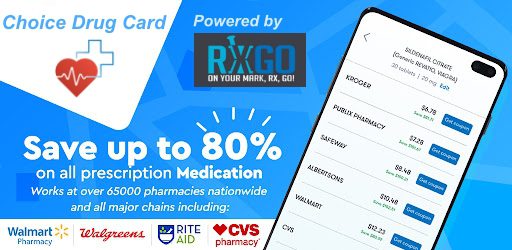
If you want a free, no-registration option that is designed for quick price checks and can be shown at the counter, the Choice Drug Card phone app is built for exactly that, and it is accepted at a wide network of US pharmacies. You can learn more at https://choicedrugcard.com.
What to do if the price is still too high
Sometimes you compare and it is still expensive. That does not mean you are out of options.
Start by calling your prescriber and asking if there is a therapeutic alternative, a different strength that can be split safely, or a generic option. Do not make changes on your own – but do ask the question. Many prescribers are used to working with cost constraints.
You can also ask the pharmacy if a different manufacturer is available for a generic. Pricing can vary by manufacturer, and availability varies by location.
If you are facing a brand-name medication with no generic, ask your doctor whether there is a clinically appropriate alternative. Even when the answer is “no,” it is worth confirming.
And if you are uninsured or between plans, consider whether a 90-day supply (when appropriate) reduces the per-day cost. Sometimes it does, sometimes it does not – which is exactly why comparing prices is so useful.
The real win: fewer delays, fewer skipped doses
Saving money is not just about being a smart shopper. It is about removing the hesitation at the pharmacy counter – the moment when people decide to “come back later” and then miss doses, stretch medication, or abandon treatment altogether.
If comparing prices helps you say “yes” to your prescription today, that is the kind of savings that matters most – because the best price is the one that lets you stay on track without stress.