Paying $90 for a prescription one month and $28 the next for the exact same medication feels wrong because it is. Cash prices at pharmacies can vary a lot, even in the same ZIP code, and many people do not realize they can ask for a lower price before they pay.
If you are uninsured, between plans, dealing with a high deductible, or stuck with a medication your insurance barely helps with, the good news is simple. You usually have more options than the price printed at the counter. The best savings often come from comparing prices, asking one or two specific questions, and using a discount app before the prescription is rung up.
The best ways to lower pharmacy cash prices start with comparison
The biggest mistake people make is assuming all pharmacies charge about the same. They do not. One store may charge much more than another for the same generic, same dose, and same quantity.
That is why the best ways to lower pharmacy cash prices almost always begin with a price check. Before you pick up the prescription, look up the medication name, strength, and quantity at more than one pharmacy. This matters even more for common generics, where price swings can be surprisingly wide.
A free prescription discount phone app makes that process faster because you can see participating pharmacy prices before you get to the counter. If the discount price is lower than what you would pay with insurance or as a walk-in cash customer, you can show the app to the pharmacist and use that price instead. For many families, that one habit saves more than anything else.
Ask for the cash price, the discount price, and the insurance price
People often assume the pharmacy will automatically give them the lowest option. Sometimes that happens. Sometimes it does not.
When you reach the counter, ask the pharmacist or technician to check all three if they apply – the regular cash price, your insurance price, and the discount app price. This is especially helpful when you have a high deductible, coinsurance, or a drug your plan does not cover well.
There is a trade-off here. If you use a discount instead of insurance, that purchase may not count toward your deductible. But if the immediate out-of-pocket cost is much lower, it may still be the better choice. For someone managing a chronic medication every month, that difference can be the reason they stay on treatment instead of delaying a refill.
Generic is usually the first place to save
If your doctor prescribes a brand-name drug, ask whether a generic equivalent is available. Generic medications use the same active ingredient and are often much less expensive than the brand version.
This is one of the most practical ways to lower pharmacy cash prices because it changes the baseline cost before any discount is applied. A discounted generic can end up costing a small fraction of the brand-name price.
That said, it depends on the medication. Some drugs do not yet have a generic. Others may have a generic, but your doctor wants you on a specific brand for a clinical reason. The right question is not just, “Can I switch?” It is, “Is there a lower-cost option that still makes sense for my treatment?”
Check whether a different quantity lowers the price per dose
Prescription pricing is not always linear. A 30-day supply is not necessarily half the price of a 60-day supply, and a 90-day fill can sometimes be much cheaper per pill.
If you take a maintenance medication, ask your prescriber and pharmacist whether a larger quantity would lower the total cost over time. This can be a strong strategy for blood pressure drugs, cholesterol medications, thyroid medications, and other long-term prescriptions.
There are caveats. A larger fill may require more money upfront. It may also be a poor fit if your dosage is still changing or if you are starting a medication for the first time and need to see how you tolerate it. Still, for stable prescriptions, quantity is one of the most overlooked pricing levers.
Consider a therapeutic alternative, not just a direct substitute
Sometimes there is no cheap generic for the exact drug you were prescribed. That does not always mean you are stuck.
Ask your doctor whether there is a therapeutic alternative in the same class that may work similarly but cost less. For example, one medication in a category may be far more expensive than another, even though both are commonly used for the same condition.
This is a conversation for your prescriber, not a decision to make on your own. But if the current price is making you think about skipping doses, say that directly. Cost is part of treatment, and good prescribers know that a medication only works if you can afford to take it.
Use a discount app before you leave for the pharmacy
A prescription discount app is most useful when you check it before pickup, not after the total has already surprised you. Search the medication, compare local pharmacies, and choose the one offering the best price for your exact prescription.
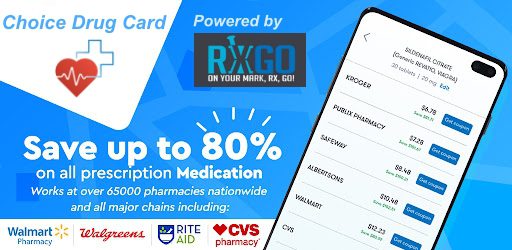
The easiest tools are the ones that do not make you jump through hoops. No fees, no activation, no waiting period, and no expiration matter because people usually need savings right now, not after filling out forms. Choice Drug Card is built around that kind of immediate use – download the phone app, search medication prices, show it to the pharmacist, and save if the app price is lower.
For many patients, that simplicity matters as much as the discount itself. If you are helping a parent, spouse, child, or even a pet with a prescription, you want something fast and reusable, not a complicated enrollment process.
Timing matters more than people think
If your refill is approaching, do not wait until you are standing at the register to start comparing prices. A few days of lead time gives you better options.
You may be able to move the prescription to a lower-priced pharmacy, ask your doctor for a different quantity, or request an alternative medication if the current one is unaffordable. Once you are out of pills and need the medication today, your leverage drops.
This is especially true for people in insurance gaps, job transitions, or early deductible season. Costs can spike suddenly, and the patients who prepare before refill day usually spend less.
Independent pharmacies can surprise you
Big chains are convenient, but they are not automatically the lowest-cost option. Independent pharmacies sometimes offer better cash prices on certain generics, and in other cases a chain may win by a wide margin.
That is the point: do not assume. Compare. If the medication is one you fill regularly, it is worth checking prices every so often because pricing can change.
For seniors and caregivers, this can be especially useful. A prescription filled every month for a year turns a small price difference into a meaningful household savings.
The best ways to lower pharmacy cash prices also include asking better questions
Most people ask, “How much is it?” A better question is, “Is this the lowest price available for this prescription today?”
That opens the door to the options that actually matter. Can they run a discount instead of insurance? Is there a lower-cost generic from the prescriber? Would a different quantity help? Is another nearby location cheaper?
Pharmacy staff are busy, and they may not know your financial situation unless you tell them. A calm, direct question can change the outcome. You are not asking for a favor. You are asking for the lowest available price.
Avoid common mistakes that keep prices high
A few habits lead people to overpay again and again. One is assuming insurance is always cheaper. Another is staying with the same pharmacy forever without rechecking prices. A third is paying for a brand-name refill without asking whether a generic became available.
Another common problem is privacy concern. Some people avoid savings tools because they assume signing up means sharing too much information. That hesitation is understandable. If privacy matters to you, look for a phone app that does not require activation, registration, or fees just to access a discount.
When the lowest price is not the only factor
There are times when paying slightly more still makes sense. Maybe one pharmacy is a block away and another is 25 minutes across town. Maybe your regular pharmacist catches refill issues quickly. Maybe you need everything in one place because you are managing medications for several family members.
Saving money matters, but convenience, adherence, and trust matter too. The goal is not chasing the absolute cheapest number at any cost. It is finding a price low enough that you can actually stay on schedule with your medication.
If a prescription price makes you hesitate, stop there and check your options before paying. The right question, the right quantity, or the right app can turn a stressful pharmacy visit into a manageable one – and that kind of relief is worth building into your routine.